
"Io è un altro": at Art Gallery Finestreria, an exhibition reflecting on the fragmented identity of the present.

Updated: Jul 14
Curated by Cecilia Severini, the exhibition brings together Giulia Apice, Nico Crisanti, Giuseppe Gallace, and Arianna Pessina in a reflection on the human figure, ambiguity, and the ongoing transformation of contemporary identity.
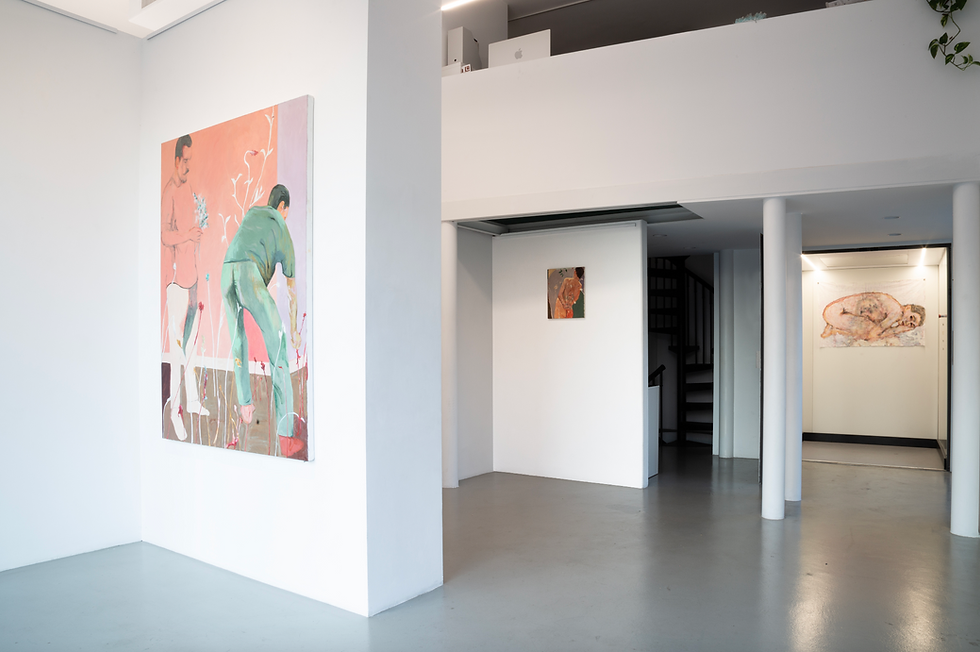
What does it mean to speak of identity today?
This is the question that runs through Io è un altro (I Is Another), the exhibition curated by Cecilia Severini at Art Gallery Finestreria, bringing together the practices of Giulia Apice, Nico Crisanti, Giuseppe Gallace, and Arianna Pessina.
The title borrows Arthur Rimbaud’s celebrated statement, “Je est un autre" a phrase that still challenges the way we perceive the self today. Identity is not something fixed, but a mutable construction, continuously reshaped by relationships, time, memory, and the context in which we live.
It is precisely this ambiguity that becomes the meeting point between the four artistic practices. Although deeply different in language and technique, they share a reflection on the human body as a place of transformation, fragility, and continuous redefinition.
An identity that never coincides with itself
Rather than presenting four distinct paths, the exhibition constructs a single collective narrative. The figures that inhabit the works all seem to escape a definitive definition. They are suspended, unstable bodies, crossed by a continuous oscillation between presence and absence, recognition and dissolution.
Ambiguity does not only concern their form, but above all the way in which they exist in the world: the relationship with space, with others, with memory, and with the landscape becomes an integral part of the construction of identity. The body, the primary image of artistic representation, thus becomes the point through which to observe the tensions of the present.
Four practices, a single reflection
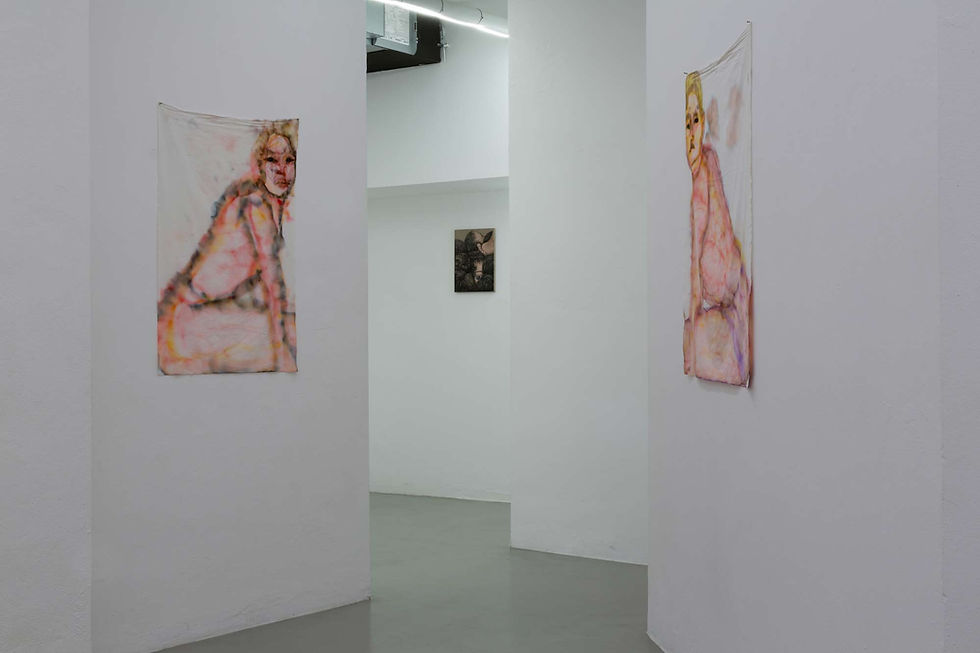
In the works of Giulia Apice, identity appears as something that is constantly forming and dissolving. The artist works on bed sheets, using markers that are subsequently dissolved with water. The result is a series of delicate, almost ghostly images, in which figures seem to emerge from the fabric only to disappear again. Drips, transparencies, and the fragility of the support transform the body into an unstable presence, suspended between memory and disappearance.

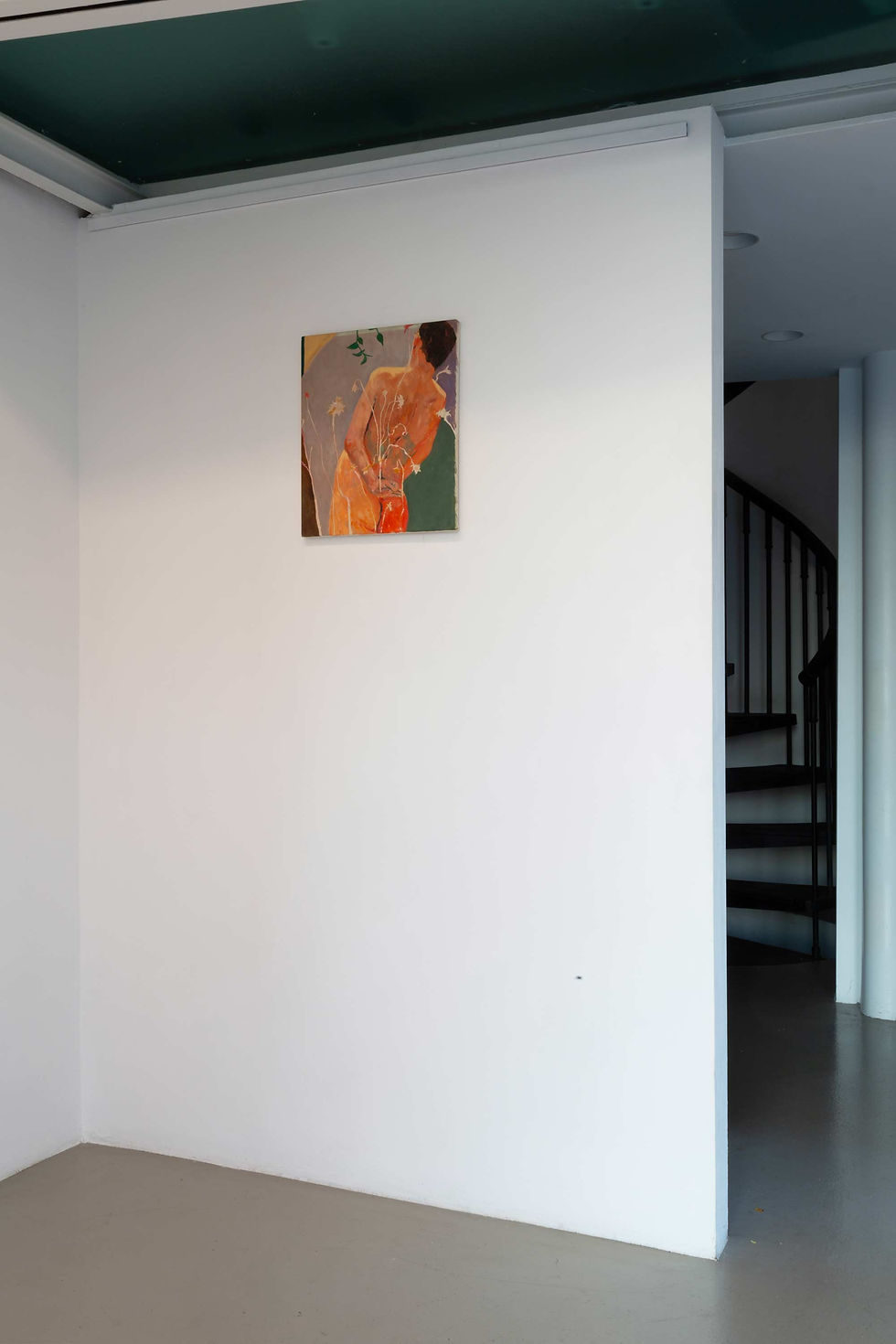
The painting of Giuseppe Gallace addresses the same fragility from a different perspective. His canvases are immersed in lush and silent natural environments, where vegetation seems to possess a vitality even greater than the human presence. The figures inhabit these landscapes without ever truly imposing themselves: they are discreet, distant apparitions, permeated by a melancholy that does not seek explanations but remains suspended between harmony and unease.
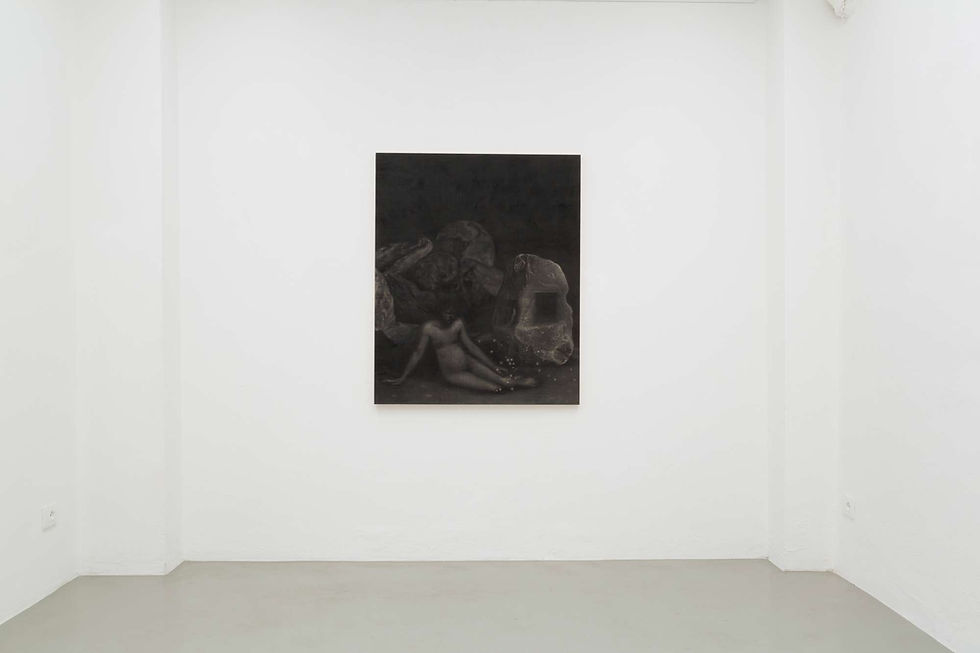
In Arianna Pessina’s works as well, the figure slowly emerges from darkness. Through charcoal and a refined use of light, the artist creates images that seem to resurface from memory. They are not completely visible presences, but traces, memories that resist time and darkness. Light never truly illuminates; rather, it accompanies the slow appearance of something that could vanish at any moment.

Different, instead, is the perspective of Nico Crisanti, who focuses his research on the relationship between the individual and the collective. In his paintings, bodies, faces, and anatomies constantly intertwine, until they lose clear boundaries. Identity is never individual, but emerges from encounter, contact, and mutual transformation. Each figure exists only in relation to the others, offering a deeply contemporary image of the human condition.

The body as a mirror of the present
Although following different paths, the four artists share the same awareness: the body is not merely a subject to be depicted, but becomes the place where memory, experience, relationships, and transformations are deposited.
The figures in Io è un altro never offer certainty. On the contrary, they constantly inhabit a threshold, an ambiguous territory where identity and otherness ultimately coincide.
It is precisely this instability that makes the exhibition particularly relevant today. In an era characterized by continuous individual and collective redefinitions, the works do not seek to present a unified image of the human being, but rather embrace its complexity, vulnerability, and inevitable contradictions.
Rather than an exhibition about the figure, Io è un altro becomes a reflection on our way of existing in the world: an invitation to recognize that each of us is continuously shaped through our relationship with others, with time, and with the space we inhabit. An identity that is never definitive, always in motion, inevitably plural.
Visitor information
Location: Art Gallery Finestreria (Via Ascanio Sforza 69, 20141 Milano) Dates: June 23 - July 14, 2026
Pening Hours: Tuesday - Saturday: 2:00 PM - 7:00 PM (or by appointment)


Comments